
Why Family History Puts People to Sleep — And How Story Fixes Everything
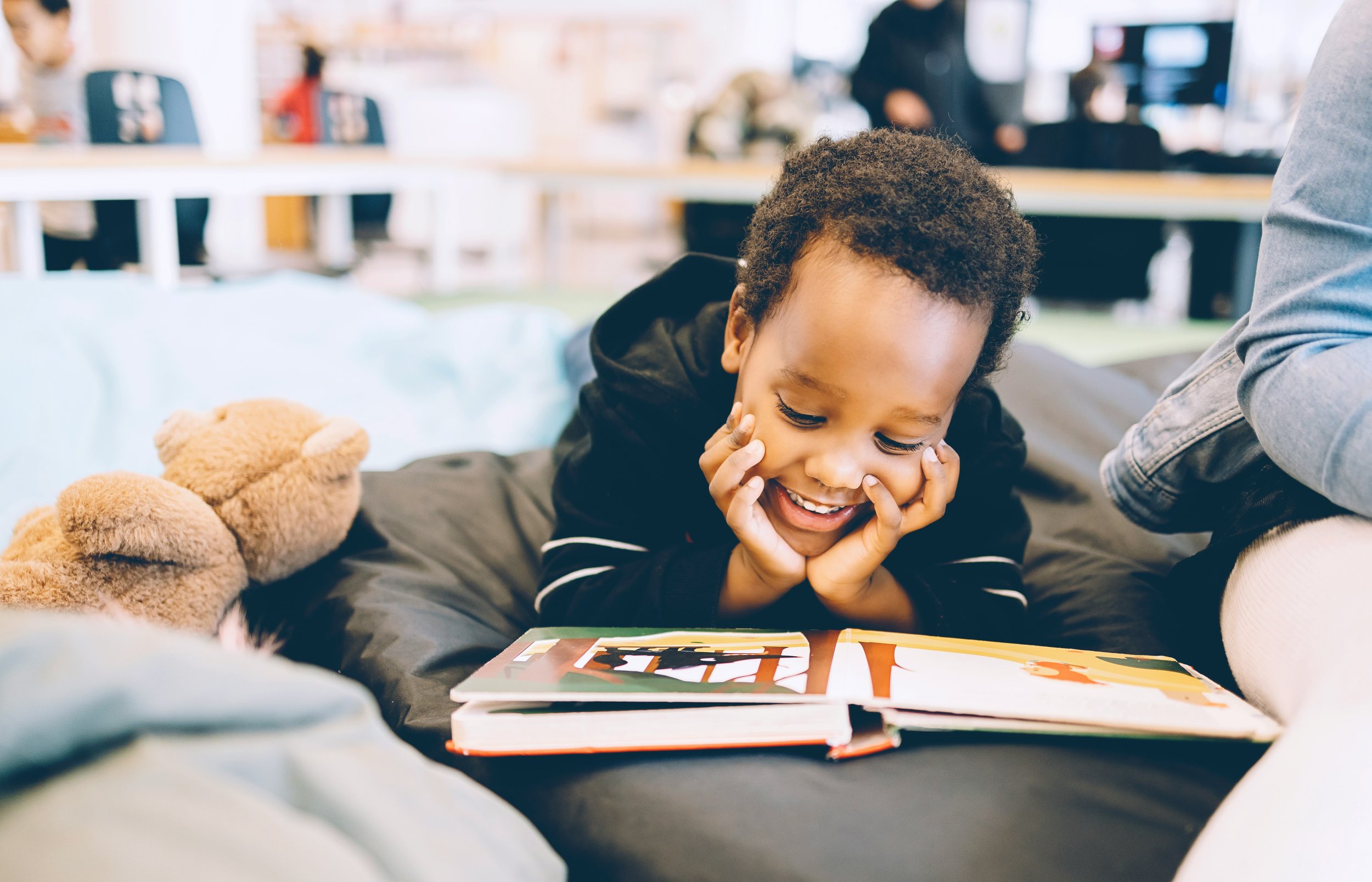
Photo by Guy Basabose on Unsplash
By Emily Watts-Luciani, Locketcasts
I have a seven-year-old who loves history.
Not the way children are supposed to love history — not dinosaurs and volcanoes and things that explode. Real history. The kind with people in it. He wants to know what people ate, what they wore, what they were scared of. He asks questions that stop me mid-sentence. He is exactly the kind of child you would think would be fascinated by his own family history.
And when I first tried to share it with him, his eyes glazed over.
Not because the story wasn't extraordinary. It was. It went back to 1653, to a sixteen-year-old girl who crossed the Atlantic on a leaking ship and helped save the city that would one day become Montreal — the city he was born in. It involved plagues and frozen rivers and a farm cleared by hand from an old-growth forest and a family that stayed in the same parish for two hundred years.
He had no idea. Because I was telling it wrong.
The problem with genealogy as information
Here is what family history looks like when it's presented as data:
Jean Demers, born Dieppe 1633, arrived New France 1647, married Jeanne Voidy November 9 1654, twelve children, died July 3 1708.
Every fact in that sentence is true. Every fact is also completely inert. There is no reason for anyone — child or adult — to care about it. It is a series of numbers attached to a name. It could be anyone. It feels like anyone.
This is how most family history gets shared. At dinner tables, at family reunions, in carefully compiled documents that get emailed around and never opened again. The person sharing it cares deeply. They've spent years finding these facts. They know how hard each one was to uncover. But the facts themselves, presented as facts, do almost nothing to the person receiving them.
The information is there. The story isn't.
What happens when you add the world
Now here is the same information, told differently:
Jean Demers was fourteen years old when he left France. He sailed from Dieppe — a port city in Normandy — with his father and brothers, crossing the Atlantic to a settlement so small and so threatened that the people inside its walls could not leave without risking their lives. He grew up there. He learned to survive a winter that made anything France had prepared him for seem mild. He learned the landscape, the river, the forest. And when he was twenty-one, he met a girl who had just crossed the same ocean he had crossed seven years earlier.
She had been sixteen when she boarded her ship. She had survived a plague on the crossing. She had watched her ship burn in the river behind her when it ran aground on arrival, with no way back to France even if she'd wanted one.
They were married on November 9th, 1654.
Something happens when you read the second version that doesn't happen with the first. You start to see them. You start to feel the cold of that November in Montreal, the weight of an axe in a forest that has to be cleared before you can plant anything, the particular courage it takes to stay somewhere when staying is hard.
You become curious. You want to know what happened next.
That is the difference between genealogy as information and genealogy as story. One is a record. The other is an experience.
What my son taught me
When I finally sat my son down and told him the story — not the facts, the story — something shifted.
I told him about the ship. About the girl on it who was barely older than he would be in a few years. About the plague, the burning ship, the November shore. About the city she helped save being the same city he was born in.
He was quiet for a moment.
Then he asked: what happened to her?
That question — what happened to her — is everything. It means he had stopped hearing about someone and started caring about someone. It means the story had done its job. A name on a chart had become a person he wanted to know more about.
He is seven years old. He now knows that he comes from a sixteen-year-old girl who crossed an ocean alone and refused to go back. He carries that. It means something to him in a way that a birth date and a marriage record never could.
The four things that turn facts into story
If you're trying to share your family history and finding that nobody is listening, here are the four shifts that make the difference:
From date to moment. Instead of "born 1637," try "she was sixteen years old, and France was in the middle of a famine." Age and context turn a number into a person.
From name to world. Every ancestor lived somewhere specific, in a specific time, with specific sounds and smells and dangers. What was happening in their world when the document was written? What did their house look like? What did they eat for breakfast? The world around them is the story.
From event to feeling. Instead of "emigrated 1900," try "he packed everything he owned into a single bag and crossed a border he would never come back from." The emotional truth of an event is what makes it land.
From general to specific. The more specific the detail, the more real the person becomes. Not "they were poor" but "the 1681 census records one gun, eight cattle, and thirty arpents of cleared land — everything a family of twelve owned in the world." Specificity is what separates a story from a summary.
You already have the material
If you've done genealogy research, you already have everything a story needs. The names, the dates, the places, the documents. The raw material is all there.
What's missing is the craft of turning it into narrative — the work of imagining the world around each name, writing the scene rather than listing the fact, making the reader feel something rather than simply informing them.
That's not a small thing. It takes time, research, and a particular kind of attention. But it is learnable. And the difference it makes — the moment a child stops looking at their phone and asks what happened next — is worth every hour of it.
If you have a family tree and a family that doesn't know what to do with it, that's exactly what Locketcasts is here for.
Get in touch at locketcasts.ca
