
French-Canadian Genealogy: Why Quebec Families Are Among the Best Documented in North America
By Emily Watts-Luciani, Locketcasts
If you have French-Canadian ancestry, you may be sitting on one of the richest genealogical records in the world without knowing it.
Most people assume that the further back you go, the less you'll find. That records get thinner, names get hazier, and at some point the trail simply runs cold. For many family lines — particularly those that passed through countries with poor record-keeping, wars that destroyed archives, or governments that had little interest in documenting ordinary people — that's true.
Quebec is different.
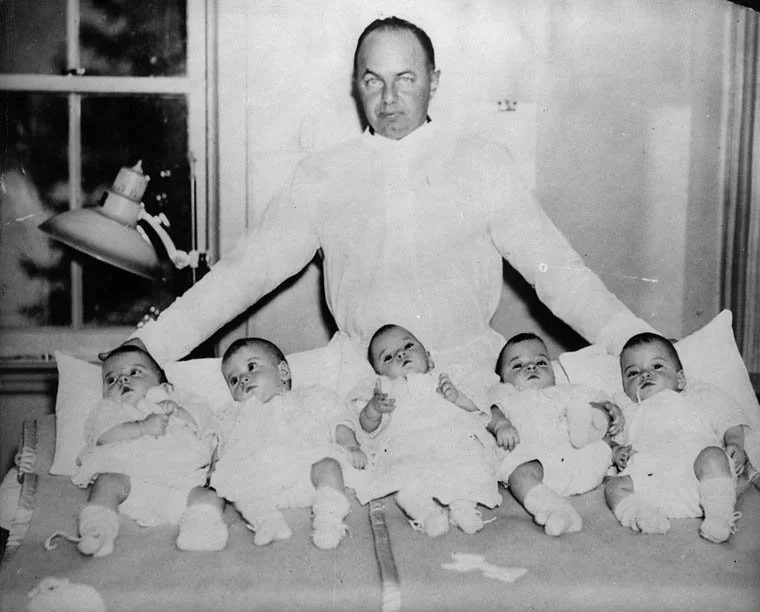
Dionne Quintuplets - Image courtesy of Library and Archives Canada
Why Quebec records go so deep
The story starts in 1539, before New France even existed. A French royal edict called the Ordinance of Villers-Cotterêts required the Catholic Church to maintain official civil records — baptisms, marriages, burials — in French rather than Latin. This was revolutionary. It meant that from the very first settlers arriving in the St. Lawrence Valley in the early 1600s, someone was writing everything down.
The first Catholic parish register in Quebec dates to 1621, for Notre-Dame de Québec. FamilySearch That's four hundred years of continuous record-keeping — through French rule, British conquest, political upheaval, and two world wars.
And crucially, a royal proclamation required two copies of all parish registers: one at the parish, and a second at the clerk of the court. Family Tree Magazine This redundancy is the reason so much survived. When fires destroyed one copy, the other often remained. The great majority of registers have been well preserved by both Church and state institutions, and because the registers were made in duplicate, a copy may exist even if one was destroyed. FamilySearch
What the records actually contain
This isn't just names and dates. The records contain precious information for genealogists like the parents of a child, the spouses, their origin, their age, and their relationships. FamilySearch A baptismal record might name both parents, their parish of origin, and two witnesses — giving you four new names to research in a single document. A marriage record often names the parents of both the bride and the groom, their places of birth, and their ages.
For researchers tracing French-Canadian lines, this means that with patience and the right tools, it's genuinely possible to follow a family back to the 1600s — to the very first settlers who arrived in New France, who crossed the Atlantic from Normandy and Brittany and the Loire Valley, and whose descendants stayed on the same strips of land along the St. Lawrence for two hundred years.
Many Quebec families can be traced back to the 1600s, which is much harder to do in other parts of North America. Heritage Discovered
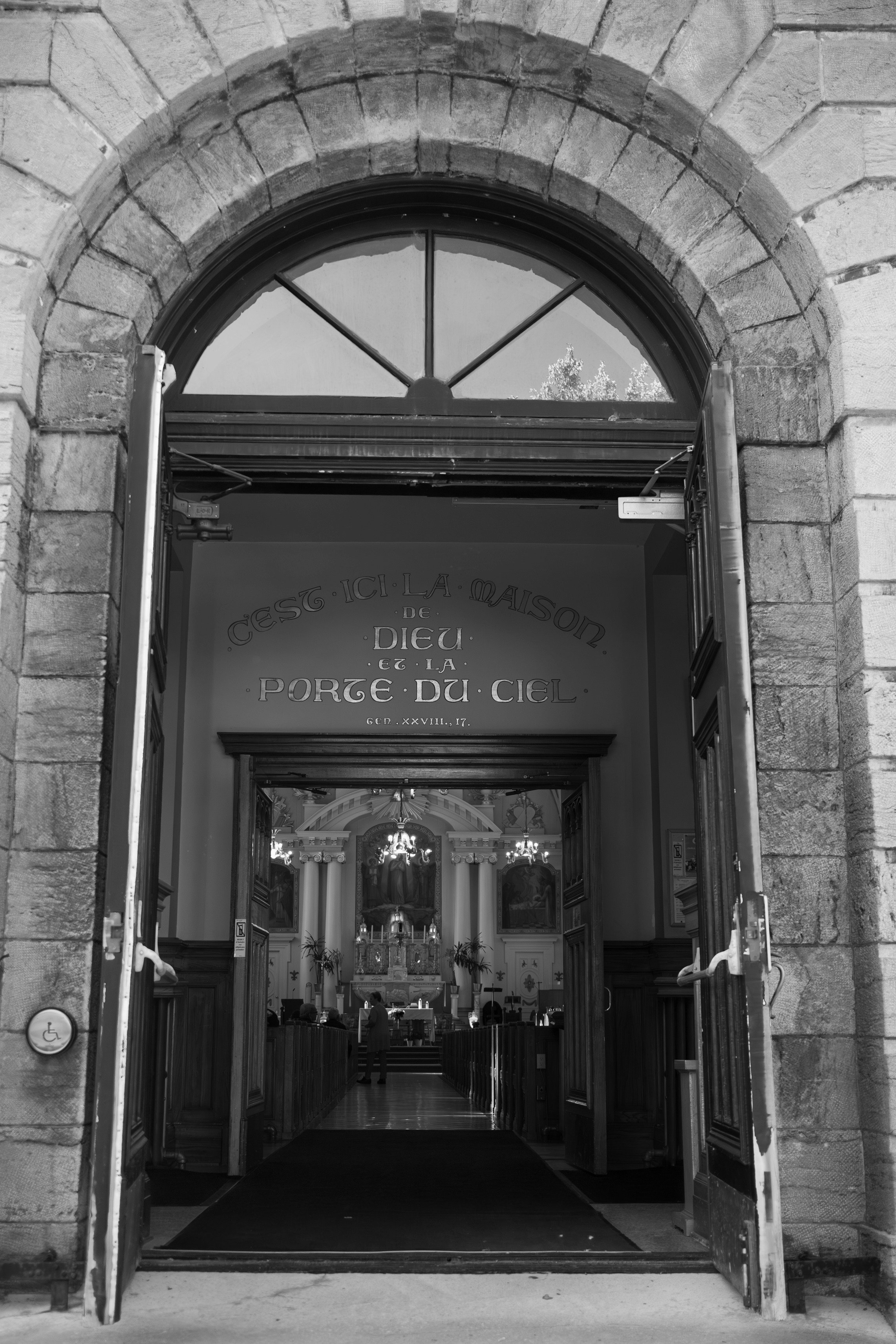
Photo by Frederick Wallace on Unsplash
The catch — and how to navigate it
Quebec records are extraordinary, but they come with their own quirks.
The first is naming conventions. The same 50 given names appear for 70% of the people before 1800, and many share the same surnames too. Genealogy Gems You will encounter dozens of men named Jean Demers or Joseph Tremblay in the same parish across the same generation. Distinguishing them requires cross-referencing multiple records — baptisms, marriages, the 1681 census, notarial acts — rather than relying on any single document.
The second is the "nom dit" system. Until the mid nineteenth century, French Canadian families were using more than one surname to designate and identify themselves. FamilySearch Your ancestor might appear as "Demers" in one record and "Demers dit Laplante" in another, or simply as "Laplante" in a third. This is not an error — it was a practical system for distinguishing between the many families sharing the same original surname. But it can send researchers down the wrong branch if they're not watching for it.
The third is language. Most records are in French, some in Latin, and the handwriting — particularly in the 1600s and 1700s — requires practice to read. Priests spelled names phonetically, which means the same person's name might appear differently in different registers depending on who was holding the pen that day.
Where to find the records
The good news is that an enormous amount has been digitized and is accessible online.
The Drouin Collection is the foundation of French-Canadian genealogy research — it holds millions of baptism, marriage, and burial records from Catholic and Protestant churches across Quebec and other French-speaking regions, spanning more than 300 years. Heritage Discovered It's available through Genealogie Quebec and through Ancestry.
The PRDH — the Programme de Recherche en Démographie Historique — is a collaboration between the University of Montreal and the Quebec provincial government that has compiled biographical files for European settlers of the St. Lawrence Valley. For researchers tracing lines back to the founding generation, it's invaluable.
The Bibliothèque et Archives nationales du Québec (BAnQ) offers free access to scanned parish registers older than 100 years. FamilySearch has extensive free collections including Catholic parish registers going back to 1621.
And the 1681 census of New France — the first comprehensive census of the colony — is held at Library and Archives Canada and is available online. It records every household on the south shore of the St. Lawrence: name, age, number of children, number of cattle, arpents of cleared land. One piece of paper, and suddenly a family that was just a name on a chart becomes a household with a gun and eight cows and thirty fields they cleared themselves.
What the records can't tell you
Here is the thing that no archive can give you, no matter how complete the records are.
The documents tell you who existed. They don't tell you what it felt like to be them.
They don't tell you what Jeanne Voidy thought as she stood on the shore of Montreal in November 1653 and watched the ship that brought her burn in the river behind her. They don't tell you what Jean Demers felt when he swung an axe into his thirty-first arpent of forest. They don't tell you what Nicolas Demers' seventeen children sounded like running across the frozen St. Lawrence in February.
That part requires something different. It requires someone to take the records, research the world those people actually lived in, and write their story as a story — not as a document.
That's what Locketcasts does.
If you have French-Canadian ancestry and a family tree that goes back further than you know what to do with, we'd love to help you turn it into something your family will actually listen to.
Get in touch at locketcasts.ca
