
You've Built the Family Tree. Now What?
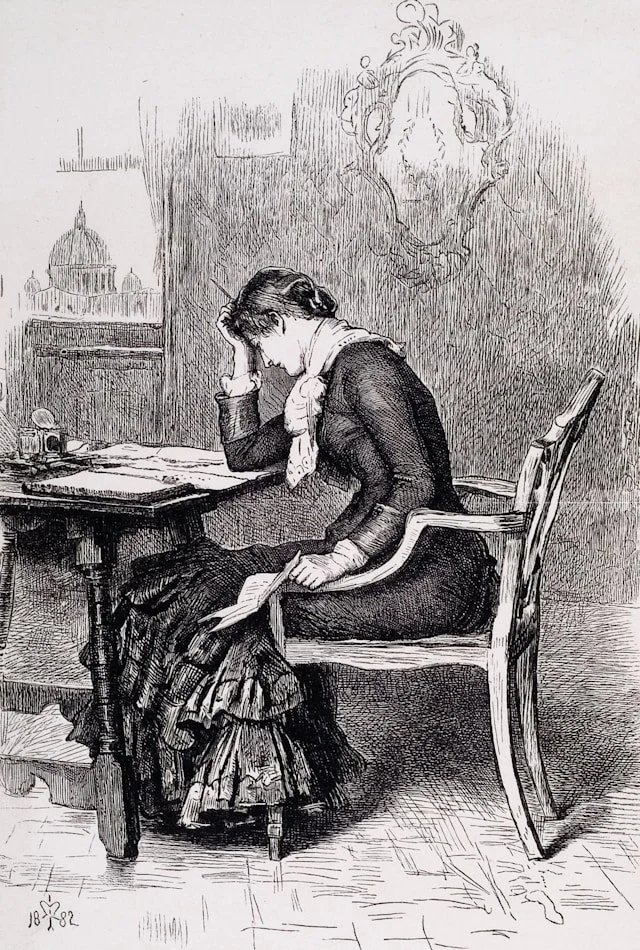
Photo by Birmingham Museums Trust on Unsplash
By Emily Watts-Luciani, Locketcasts
You've spent years on it.
Late nights on Ancestry. Emails to archives in countries you've never visited. A spreadsheet that started simple and is now forty tabs deep. You've found the ship manifests and the census records and the baptismal registers. You've traced one line back to the 1600s and another to a village in Eastern Europe that changed its name three times. You've hit brick walls and broken through them. You've discovered things that took your breath away.
And now you have a family tree that goes back twelve generations, a folder full of documents, and absolutely nobody to share it with.
This is one of the most common and least talked-about experiences in genealogy. The research phase has a rhythm to it — a question, a search, a find, another question. It is endlessly absorbing. And then one day you realize the tree is as complete as it's going to get, at least for now, and you are sitting with something extraordinary that exists almost entirely in your own head.
So what do you do with it?
1. Organize it for someone who isn't you
The first and most practical step is also the most humbling one: accept that the way your research is currently organized makes sense only to you.
You know that "Demers (2)" refers to the second Nicolas Demers, not the first. You know that the folder labeled "Galicia" contains your great-grandmother's records even though she always said she was Polish. You know which sources you trust and which ones you're still verifying.
Nobody else knows any of this.
The most durable gift you can give your family is a version of your research that a non-genealogist can actually navigate. That means a single master document — not forty tabs — with sources cited, uncertainties noted, and enough context that someone picking it up in twenty years can understand what they're looking at.
It doesn't have to be beautiful. It has to be legible.
2. Record the people who are still here
Here is the thing about genealogy research: the further back you go, the more documentation exists. Parish registers, census records, ship manifests — the institutional record of the past is often richer than what survives in living memory.
But the people sitting at your kitchen table right now are leaving no institutional record at all.
Your ninety-year-old aunt who remembers what the house smelled like. Your father's story about the border crossing he's only told twice. The name your grandmother used for a relative that appears nowhere in any document. This material is irreplaceable, and it is disappearing.
Record it. A phone propped against a coffee cup is enough. Ask open questions — not "what year did you arrive" but "what do you remember about the day you left." Let them talk. You can organize it later.
The oral history is the part of your family record that no archive will ever hold.
3. Find the community
Genealogy is a surprisingly social pursuit once you step outside the solitary research phase.
Genealogical societies exist in almost every province and city in Canada — many with libraries, databases, and researchers who specialize in exactly the ethnic or regional lines you've been tracing. The Société Généalogique Canadienne-Française in Montreal holds resources for French-Canadian research that aren't available anywhere else online. Provincial archives often have staff genealogists who can point you toward collections you didn't know existed.
Online communities are also worth finding. Facebook groups organized around specific surnames, regions, or ethnic communities can connect you with distant cousins who have been researching the same lines from the other direction — and who may have documents, photographs, or oral histories that fill your gaps.
Your research doesn't have to live in a folder on your desktop. It can be in conversation.
4. Turn it into something people will actually engage with
This is the step that most genealogists never take, and it's the one that changes everything.
All of the steps above — organizing, recording, connecting — are about preserving what you've found. This step is about transforming it.
A family tree is a document. Documents get filed. What gets kept — what gets passed down, what actually travels from one generation to the next — is story.
Think about what you actually know about each of your ancestors. Not just the dates, but the world. The Ukrainian great-great-grandfather who arrived in Alberta in 1903 with forty dollars and a land grant for 160 acres of prairie he'd never seen — what was the first winter like? The Scottish grandmother who came over as a war bride in 1946 — what did she pack? What did she leave behind? The Jamaican grandfather who arrived in Toronto during the nursing shortage of the 1960s and worked double shifts for twenty years — what kept him going?
You have the skeleton. What it needs is flesh.
That transformation — from document to story, from data to narrative, from names and dates to people you want to know — is the work of a writer as much as a researcher. It requires someone to imagine the world around each name, to research the historical context, to write the scene rather than list the fact.
It is also the most meaningful thing you can do with years of genealogical work. Because a story travels. A story gets told to children, and those children tell it to their children. A story is how a family stays connected to where it came from across generations that never met.
Where Locketcasts comes in
This is exactly the work we do.
If you have a family tree — complete, partial, or anywhere in between — and you want to turn it into something your family will actually listen to, we take your research and transform it into a narrative podcast series made for a specific person in your family. We do the historical research, write the scripts, and produce the finished audio.
You've done the hardest part already.
We'll take it from here.
Get in touch at locketcasts.ca
